
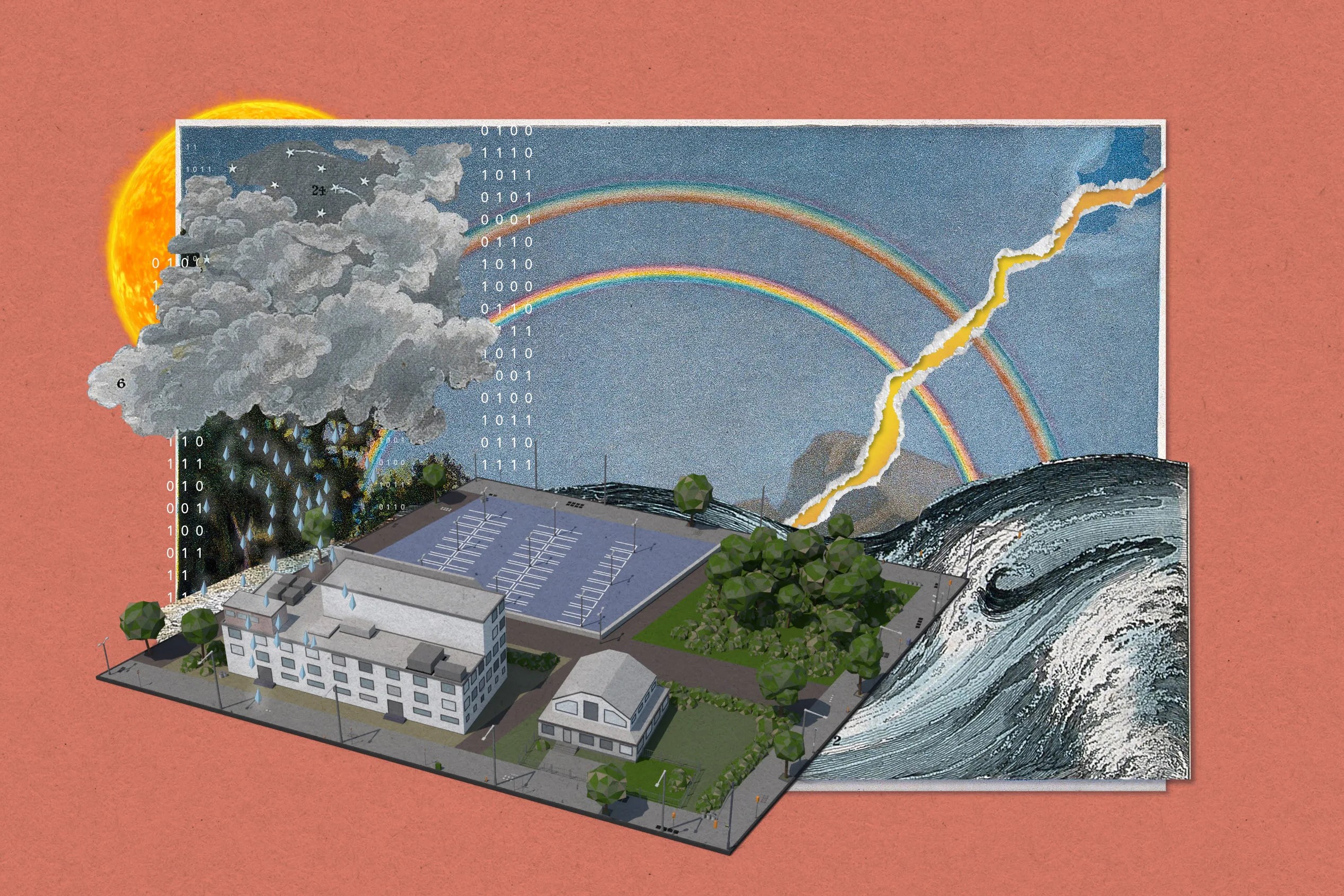
Weather forecasting has advanced far beyond simple observations of clouds and wind patterns. Modern systems rely on a global network of satellites, radar stations, ocean buoys, and atmospheric sensors. These instruments collect enormous volumes of data about temperature, humidity, wind speed, and air pressure. Scientists feed this information into powerful computer models that simulate how the atmosphere behaves over time. The result is a detailed picture of weather patterns that helps meteorologists anticipate storms, rainfall, and temperature changes days in advance.
Satellites play a central role in this process. Orbiting far above Earth, they capture continuous images of cloud formations and track large weather systems moving across continents and oceans. Some satellites also measure heat radiation and moisture levels in the atmosphere. These observations help researchers understand how storms form and develop. Without satellite coverage, forecasting would rely heavily on ground stations, leaving large gaps over oceans and remote regions.
Supercomputers transform raw data into usable forecasts. Weather models divide the atmosphere into millions of small segments and calculate how each segment interacts with its neighbors. The process requires immense computing power, since the atmosphere constantly changes. Even small variations in temperature or wind can alter the outcome. Meteorologists run multiple simulations with slightly different conditions, comparing results to determine the most likely scenario.
Forecast accuracy has improved significantly over the last few decades. Short-term predictions now help airlines plan flight routes, farmers manage crops, and emergency services prepare for severe weather. While long-term forecasts remain challenging, ongoing improvements in satellite technology and computing continue to refine predictions. Modern forecasting blends observation, mathematics, and advanced computing to interpret the behavior of a complex natural system.